Mianzhu
The Romance of the Three KingdomsMianzhu is the site of Shu’s final major stand before the advance on Chengdu. Its fall follows the defeat and deaths of Zhuge Zhan and his son Zhuge Shang, and leaves the capital exposed as the kingdom’s leaders debate whether to flee or surrender.
Setting and Strategic Importance
Mianzhu stands on the route Deng Ai’s army takes toward Chengdu during Wei’s invasion of Shu. By the time the Wei forces reach it, their campaign has already turned sharply against Shu: Deng Ai has overcome Zhuge Zhan’s resistance, and the city has become the last major obstacle before the capital.
The city’s position gives its defense stakes beyond the immediate battle. Zhuge Zhan sends an appeal for assistance to Sun Xiu, ruler of Wu, but reinforcements cannot arrive in time. Mianzhu is therefore defended while the possibility of outside aid remains uncertain, and its fall clears the way for the march on Chengdu.
The Battle and Fall
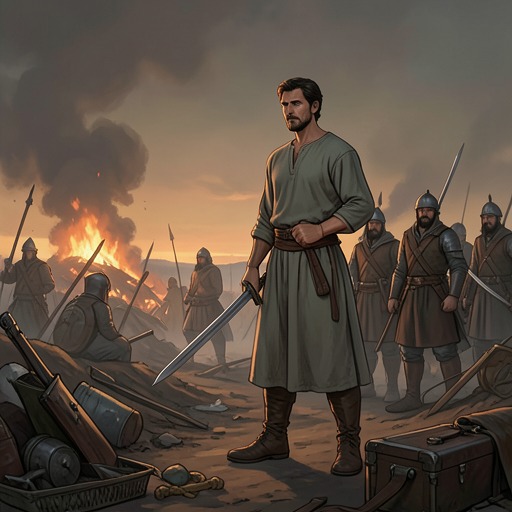
Deng Ai uses a retreat-and-ambush strategy to inflict a crushing defeat on Shu’s forces and then besieges Mianzhu. Faced with the approaching defeat, Zhuge Zhan chooses a last attempt to break out rather than wait for help whose arrival is uncertain. His son Zhuge Shang rides beside him as the army goes out to fight.
The decision ends in disaster: both Zhuge Zhan and Zhuge Shang die in the battle. Deng Ai, moved by the courage of the father and son, gives them an honourable burial. Mianzhu falls the following day, and the invasion proceeds toward Chengdu.
Consequences for Shu
News of Mianzhu’s fall and the deaths of its defenders reaches Chengdu, where panic has already begun to drive people from the capital. The second ruler consults his advisers. Some urge flight south and refuge among the Man tribes; Qiao Zhou rejects that proposal and advises surrender to Wei instead. The report of the battle thus leads directly into the decision over Shu’s fate: after further deliberation and a memorial from Qiao Zhou, the ruler resolves to submit.
Mianzhu’s narrative significance lies in this decisive transition. Its defense brings the resistance led by Zhuge Zhan and Zhuge Shang to an end; its loss turns the threat to the capital into an immediate political crisis. The account marks the difference between a courageous stand, which Deng Ai honors, and a strategic outcome that leaves Shu unable to prevent the enemy’s advance.